Want a stalking entity?
Start with The Obsessed, Kenny, or Face of Horror. Match NeoForge, Fabric, or Forge exactly, then test spawn behavior in a new world before adding other entity mods.
Open The Obsessed sourceJava 1.21.1 version guide
The best Minecraft horror mods 1.21.1 are not chosen by a thumbnail alone. Start with the exact loader, client/server role, release file, and source page, then test one project in a copied world or clean Java instance.
The project records below were checked through official Modrinth metadata and gallery media on August 15, 2026. They are dated research notes, not a permanent latest-version promise. Re-open the official project page before installing.
External source pages open directly. Check the file type, edition, and version before downloading.

Start with the decision
If you want a current 1.21.1 Java shortlist, begin with The Obsessed, Kenny [HORROR], Revervox, Vanilla But Wrong, Server-Side Horror, and Face of Horror. The important difference is not simply which project looks scariest. Each one targets a different loader or play pattern.
The safest first choice is the project whose 1.21.1 record matches your profile exactly. The Obsessed and Face of Horror are NeoForge-oriented in the checked records. Kenny has 1.21.1 files for Fabric, Forge, and NeoForge. Revervox is a NeoForge multiplayer choice, while Server-Side Horror is marked unsupported on the client and required on the server. That distinction prevents a common failure: treating a valid jar as compatible with every setup.
This page is a version guide, not a file mirror. Use the official project page to re-check the live version, loader, dependencies, and release notes. A project page is more reliable than a repost that promises a universal download, and a dated file record is more useful than calling every link latest without evidence. For 1.20.1, use the existing Minecraft 1.20.1 horror mods guide instead of forcing a 1.21.1 file into an older profile. For the newer 1.21.11 profile, see the Minecraft 1.21.11 horror mods guide instead of mixing release files.
Dated official metadata check
The table uses official Modrinth project and version records checked on August 15, 2026. File sizes are the primary file sizes returned by Modrinth and help you plan a profile; they are not a quality, performance, or safety score. The direct file links below point to version-specific Modrinth CDN records checked from project metadata, while the project link remains the best place to confirm live requirements.
The release date is included because Minecraft mod pages change. If the official project page now shows a newer compatible file, follow the live project page and do not assume the dated table is still current. If a loader or client/server label changes, rebuild the profile rather than mixing files from different records.
Match the scare to the profile
A useful 1.21.1 horror list explains what changes during play. The Obsessed and Face of Horror are entity-led choices: expect the main tension to come from encounters, distance, and the way a creature changes an otherwise ordinary survival loop. Kenny also belongs here, but its multi-loader release gives it a wider setup choice. These are good first tests when you want a recognizable threat rather than a prebuilt story map.
For a group, Revervox is the clearest specialist because its project description centers on voice-based confusion and requires the same compatible setup on both sides. Vanilla But Wrong is a Fabric psychological option with shared sanity, adaptive events, and audio or UI disruption. Server-Side Horror belongs in its own category: the server carries the main behavior, so a local single-player test does not prove that a dedicated server will behave correctly.
The official Fabric installer and loader documentation can help with the profile, but the mod project page decides the project's dependencies and supported game versions. Do not select Fabric just because it is familiar, and do not use a Forge or NeoForge label as proof that the same jar works in every 1.21.x release.
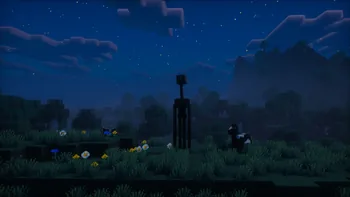
Start with The Obsessed, Kenny, or Face of Horror. Match NeoForge, Fabric, or Forge exactly, then test spawn behavior in a new world before adding other entity mods.
Open The Obsessed sourceRead Revervox first. The client and server roles matter, and voice features should be discussed with every player before a session starts.
Open Revervox sourceInspect Server-Side Horror and follow its server-required classification. Do not judge a server-only project from a single-player launch.
Open server-side sourceClean setup workflow
Start with a separate Java instance or profile. Keep the main survival world, unrelated 1.20.1 profile, and existing modpack outside the first test. A clean baseline makes a missing dependency or loader mismatch easier to identify, and a copied world lets you remove the experiment without damaging a valuable save.
For a 1.21.1 profile, read the official project version list before downloading. Check the loader, game-version range, client/server classification, dependencies, file name, and release date. If the file link is version-specific, keep the source project page open so you can compare the live record with the file you actually saved.
Use the site's Verity troubleshooting workflow for the same general discipline: identify the edition, loader, version, dependency, and log evidence before changing files. Randomly replacing a jar often hides the original mismatch and makes the next crash harder to diagnose.
Use a separate launcher instance and select Minecraft Java 1.21.1. Do not let the launcher silently update the profile to another release.
Choose Fabric, Forge, or NeoForge from the project's 1.21.1 record. A loader name in a search snippet is not enough; confirm the file's loader on the official project page.
If the project lists a library or API dependency, match that dependency to the same game version. Start with one horror project so the first launch has a clear cause if it fails.
Use the checked file only as a dated reference. Prefer the official project page, inspect the current release, and never rename a Java jar into a Bedrock addon.
Check launch, spawn behavior, sounds, first-night events, memory, and the latest log. Stop and roll back if the world behaves unexpectedly or the project conflicts with another system.
Record the Minecraft version, loader, project version, dependency list, and source URL. Only add another horror project after the first one works in isolation.
Client and server boundary
Some do, but the answer is project-specific. The checked records mark The Obsessed, Kenny, Revervox, Vanilla But Wrong, and Face of Horror as requiring both client and server. Server-Side Horror is the exception in this shortlist: the server is required and the client is unsupported. That means a single-player launch cannot validate every multiplayer path.
For Revervox or any project that changes voice, communication, or shared sanity, get player consent before the event and agree on a rollback plan. For a dedicated server, test join, spawn, reconnect, restart, and a second player before inviting the full group. Share one frozen profile manifest instead of asking each player to collect files from different mirrors.
The separate Minecraft horror mods multiplayer guide owns the broader group-play intent. This page only adds the 1.21.1 compatibility layer. If your main question is voice chat, realms, or a server pack, use that page rather than turning a version table into a second multiplayer hub.
Version boundary and limits
Similarweb phrase and question data contains both 1.21.1 and 1.21.10/1.21.11 wording. Treat those as separate compatibility signals, not interchangeable spellings. A Java 1.21.1 jar belongs to the exact profile named by its project record. If your launcher reports another version, filter the official source page again before installing.
This page does not cover Bedrock `.mcaddon` or resource/behavior-pack installation. Java `.jar` files cannot be imported into Bedrock by renaming them, and a Bedrock addon cannot be made into a Forge, Fabric, or NeoForge mod by placing it in a mods folder. Use the site's Verity Bedrock guide for the edition boundary and the best Minecraft horror mods page for the broader Java/Bedrock comparison.
The official Modrinth records were checked on August 15, 2026. Releases, dependencies, file sizes, and project status may change after that date. The honest workflow is to use the project page as the current source, compare it with your profile, and keep a backup or copied world. Do not treat a dated table, a video title, or a mirror button as proof that a file is still the correct one.
Next pages
Use the older Java version guide when your Forge or Fabric profile is locked to 1.20.1.
Open the 1.20.1 guideFilter the broader Fabric horror list when your loader matters more than the 1.21.1 version boundary.
Open the Fabric guideUse the dedicated multiplayer guide for voice, server, client, and group-session decisions.
Open the multiplayer guideApply the edition, loader, dependency, and log-isolation process after a failed launch.
Open troubleshootingCompare broader Java and Bedrock horror directions before selecting a version-specific project.
Compare broad picksFAQ
There is no universal best pick. The Obsessed, Kenny, Revervox, Vanilla But Wrong, Server-Side Horror, and Face of Horror cover different scare styles and loader roles. Start with the project whose official 1.21.1 record matches your Fabric, Forge, or NeoForge profile, then test it alone.
Some can. Kenny has a checked Forge 1.21.1 file, while The Obsessed, Revervox, and Face of Horror are represented by NeoForge records in this dated check. Server-Side Horror also has Forge and other loader records. Always choose the exact loader file from the live project page instead of assuming that every horror mod supports Forge.
It depends on the project. The checked records mark most of this shortlist as client and server required, while Server-Side Horror is server-required and client-unsupported. Read the client/server classification, match dependencies, and test with two players before a full session.
No. A Java `.jar` is not a Bedrock `.mcaddon`, resource pack, or behavior pack. Renaming the file does not change its platform or loader. Use a Bedrock-specific source and the site's Bedrock guide when your game is Minecraft Bedrock.
No. Treat each version label as a separate compatibility check. The keyword data contains several 1.21.x variants, but a search phrase cannot prove that one jar supports another release. Confirm the exact game-version filter on the official project page.
The links are version-specific Modrinth CDN records captured from official project metadata on August 15, 2026. Prefer the project page immediately before installation because releases and dependencies can change. If the direct file no longer matches the live record, use the official project page instead of a mirror or guessed URL.